Dragon Fruit in Malaysia — Varieties, Season & Where to Buy
A practical guide to Malaysian dragon fruit (buah naga) — red and white flesh varieties, growing regions, and how to pick ripe fruit at markets and farms.
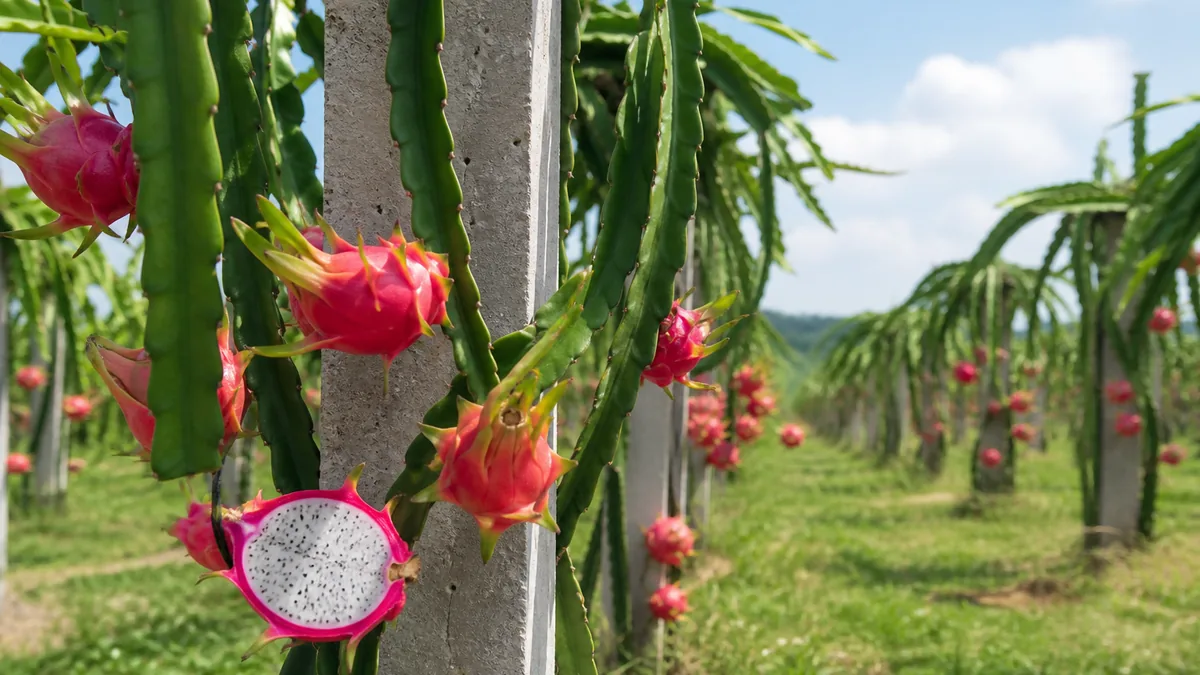
Dragon fruit — buah naga — has moved from niche orchard crop to mainstream Malaysian produce. Pink-skinned varieties with white or magenta flesh appear in supermarkets, night markets, and agrotourism farms across Selangor and Johor. If you are new to the fruit, this guide covers what to buy, when it is sweetest, and where orchard visits make sense.
How dragon fruit grows in Malaysia
Dragon fruit is a climbing cactus that thrives in Malaysia’s warm, well-drained lowlands. Commercial farms train vines on concrete posts and trellis wires so fruit hangs within easy reach for harvest. Flowers bloom at night and are often pollinated manually or by moths — a detail explained on many farm tours.
Planting expanded rapidly after 2010 as demand grew for fresh fruit, juice, and export-grade packing. Selangor — especially Sepang — became a hub because of land availability and proximity to Kuala Lumpur buyers. Johor and Perak followed with estate-scale blocks supplying wholesalers in Johor Bahru and the Klang Valley.
Red vs white flesh
White-flesh dragon fruit tends to be milder and slightly crisper with a clean, melon-like finish. It suits breakfast platters and people who prefer subtle sweetness.
Red-flesh varieties are often sweeter and carry betalain pigments that tint smoothies, sorbets, and cutting boards vivid pink. They contain antioxidant compounds associated with the red colour — another reason juice bars feature them prominently.
Both types are low in calories and high in fibre. Nutritionally they are similar; choice comes down to flavour intensity and recipe use.
| Trait | White flesh | Red flesh |
|---|---|---|
| Sweetness | Mild to moderate | Moderate to strong |
| Colour in dishes | Minimal | Strong pink tint |
| Typical price | Often slightly lower | Premium in some markets |
| Best for | Fresh eating, light salads | Smoothies, desserts, sorbet |
When to buy
Commercial plantings produce year-round, with noticeable flushes one to two months after heavy rain when flowering peaks. For the sweetest fruit, choose specimens that yield slightly to thumb pressure — similar to a ripe avocado — and have fresh, green-tipped scales rather than dried brown tips.
Morning markets receive overnight harvests; supermarket fruit may be several days from orchard depending on logistics. If you want maximum freshness, buy from pasar pagi vendors who can name the farm district.
Signs of ripeness: even skin colour, slight give, fresh stem end, no soft dark bruises.
Signs to avoid: shrivelled scales, mushy spots, fermented smell when cut.
Where it grows
Selangor — especially Sepang — remains the best-known region for farm tours and photo-friendly agrotourism. Johor supplies southern markets and Singapore-bound wholesalers. Perak has smaller commercial blocks feeding Ipoh and northern Klang Valley distributors.
See our detailed dragon fruit guide for nutrition and serving ideas, and the HL Dragon Fruit Eco Farm profile for Sepang visit planning including restaurant and landmark building stops.
Price guide (indicative)
Prices shift by season and channel. These ranges help set expectations — confirm locally.
| Channel | Typical range (MYR per kg) |
|---|---|
| Pasar pagi | 5 – 10 |
| Supermarket | 8 – 14 |
| Farm shop | 10 – 18 (premium varieties) |
Whole fruit sold by piece at stalls is common — ask weight if comparing value.
Serving at home
Chill halves, scoop flesh with a spoon, or cube for fruit platters. Lime juice brightens mild white varieties. Red flesh blends into smoothies without added colour powder.
Dragon fruit pairs well with other Malaysian tropical fruit in rojak buah — balance mild dragon fruit with tangy belimbing or sweet mango. Sorbet and agar desserts appear at hotel buffets during peak supply months.
Visiting a farm
Agrotourism farms offer orchard walks, tasting, and sometimes hands-on pollination demos during flowering season. HL Dragon Fruit Eco Farm in Sepang combines planting education with dining and a landmark building recognised in national and international record books.
Contact us for opening hours and tour availability. Weekday mornings suit photography and quieter paths; weekends suit families who want full restaurant and shop operations.
Quick checklist before you go
- Confirm farm hours by phone or email
- Wear hat and sunscreen — orchards are open
- Bring cash and card for farm shop products
- Plan 2–4 hours if including a meal
- Read our Sepang agrotourism day trip guide for combined itinerary ideas