Farm-to-Table Dining in Malaysia — Fruit on the Menu
How Malaysian restaurants use local fruit — from dragon fruit salads to durian desserts — and what to expect at farm-linked venues.
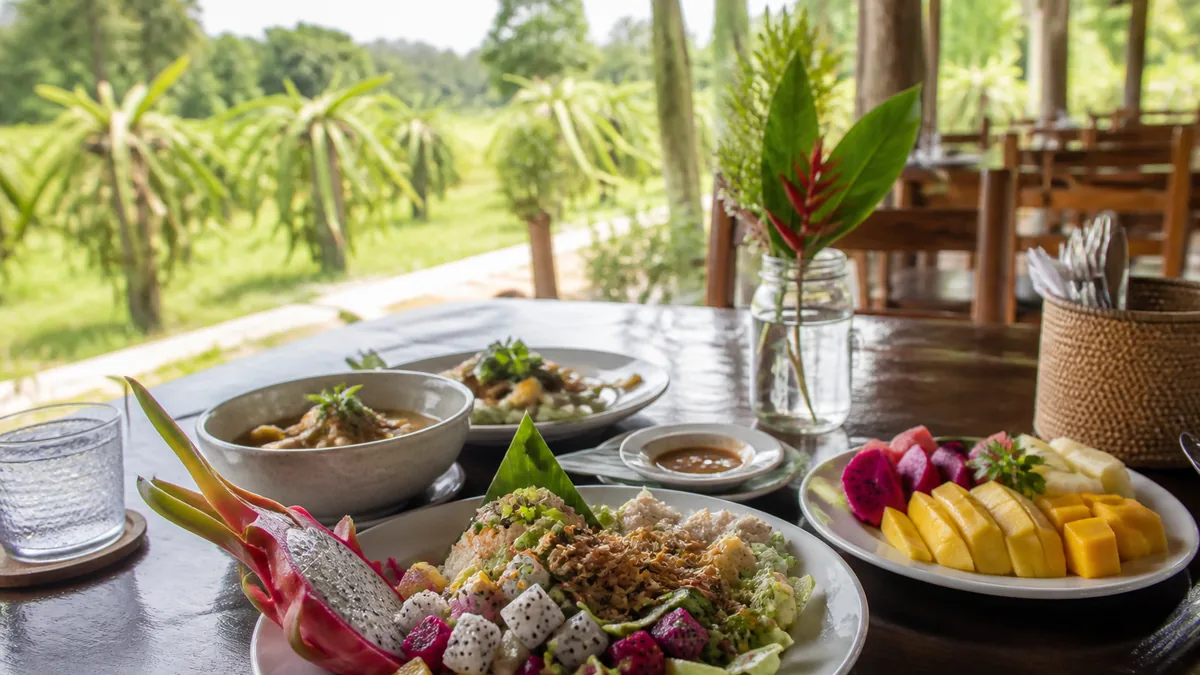
Farm-to-table is not new in Malaysia — kampung kitchens have always cooked with what orchards produce the same week. Modern agrotourism adds restaurant concepts tied to working farms, especially for dragon fruit, organic vegetables, and highland greens. This guide explains what to expect on the plate and how to plan a fruit-forward meal.
The Malaysian farm-to-table context
Traditional Malay, Chinese, and Nyonya cuisines already embed local fruit: unripe papaya in kerabu, pineapple in curry, banana leaf as serving vessel. What changed in the 2010s is destination dining — visitors drive specifically to eat at a farm restaurant where menu items reference today’s harvest.
That model works best for crops with visual appeal and processing flexibility. Dragon fruit leads in Selangor; strawberry and vegetable farms lead in Cameron Highlands; durian appears in urban dessert cafés rather than orchard sit-down meals (aroma rules).
Dragon fruit on the plate
Sepang’s HL Dragon Fruit Eco Farm popularised dishes using fresh pulp, juice, and edible flowers. Menus shift with harvest — white vs red flesh availability, flower season, and whether rain diluted sweetness that week.
Typical preparations you may see:
- Fresh pulp cups with lime
- Dragon fruit sorbet or agar
- Salads with shrimp or chicken and flower garnish
- Blended juice (red varieties need no food colouring)
- Dragon fruit fried rice (colourful, mild sweetness)
Ask staff what is ripe that week — farms honest about peak items sell better and taste better.
Read our HL farm visitor guide for booking tips.
Durian desserts (urban and seasonal)
Mid-year brings durian pengat (slow-cooked coconut custard with pulp), crepe, mousse, and ice cream menus in KL and Penang cafés. Premium cultivars are priced per gram — confirm Musang King surcharge before ordering whole platters.
Farm-linked durian dining is less formal sit-down and more stall seating under tarpaulin — the experience is about fresh husk, not plated courses. Both belong under “Malaysian fruit dining” but expect different settings.
Pair durian desserts with mangosteen sorbet or juice where offered — classic flavour balance.
Pineapple in savoury dishes
Johor pineapple appears in nanas masak (cooked pineapple curry), grilled skewers with chili dip, and as fresh counterbalance to rich rendang. Roadside stalls near Yong Peng sell fruit for picnics; factory outlets sell juice reducing into jam for pineapple tarts.
Farm-to-table here means buying fruit metres from where it fell — cook at homestay or eat at local Chinese/Malay restaurants that source from the same wholesalers.
See Johor Pineapple Belt and pineapple fruit guide.
Other fruits on modern menus
| Fruit | Dining appearance |
|---|---|
| Coconut | Santan curries, shakes, ais kacang |
| Mango (when in season) | Salad, sambal, dessert |
| Soursop | Juice, soda mocktails |
| Cempedak | Goreng cempedak starter at kampung stalls |
| Starfruit | Rojak, juice |
Chefs in KL increasingly name farms on menus — ask waitstaff about origin if curious.
Tips for visitors
- Reserve weekends at popular farm restaurants — walk-ins face long waits.
- Ask spice level — fruit salads may include chili and belacan.
- Book direct with farms or trusted tour operators for transport-inclusive packages.
- Plan digestion time before driving — large farm lunches plus fruit tasting is filling.
- Check hours — orchard restaurants may close mid-week for maintenance.
Price expectations
Farm restaurant set meals often run MYR 35–80 per person depending on courses and protein. Product shop purchases (juice, dried fruit) are extra. Compare with urban café dragon fruit drinks at MYR 12–18 — farm pricing includes experience and freshness premium.
Sustainability and local benefit
Buying at farm shops directs margin to growers and processors in the district. Ask about seasonal workers and local sourcing — reputable farms explain supply chain when asked.
See farm profiles for destinations we feature and contact for HL Dragon Fruit Eco Farm enquiries.
Build a fruit-forward day trip
Morning orchard tour → farm lunch featuring that crop → product shop for gifts → afternoon pasar stop for complementary seasonal fruit. Selangor dragon fruit and Johor pineapple routes both support this pattern within one day from KL.
Combine with our Selangor agrotourism guide for timing and traffic advice.