Rambutan Harvest Guide — Buying at Peak Sweetness
When rambutan is in season in Malaysia, how to pick juicy clusters, and where Johor and Pahang sell the best roadside harvests.
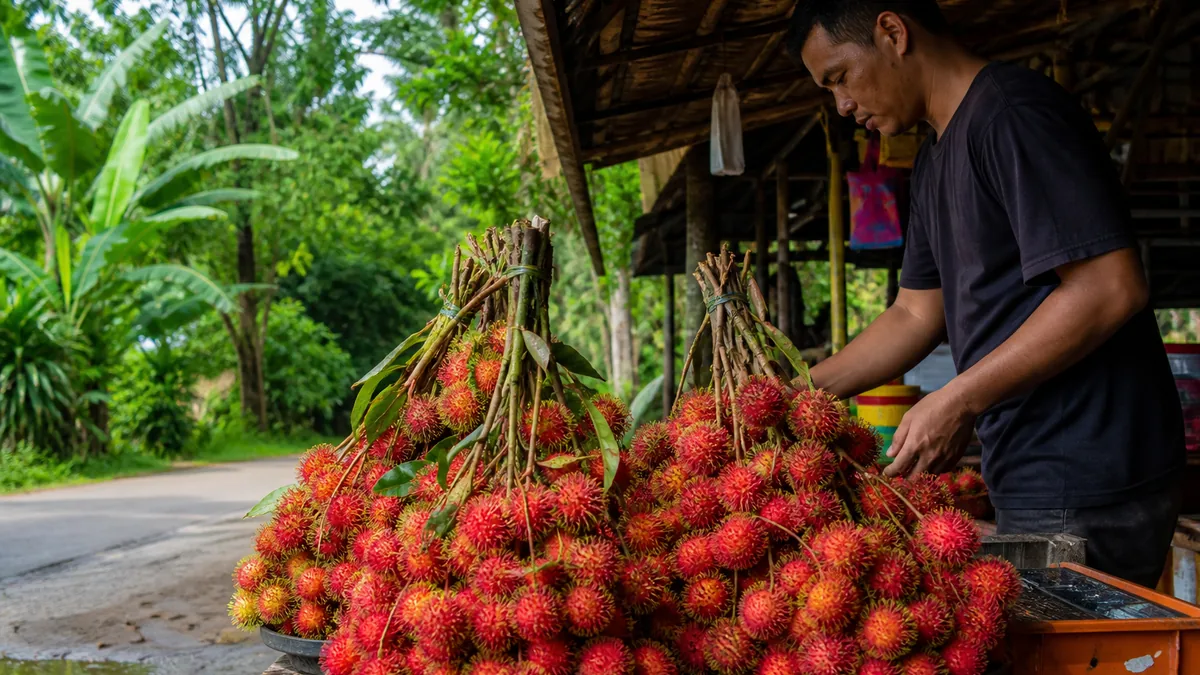
Rambutan’s hairy red shell hides juicy, translucent flesh — one of Malaysia’s most refreshing mid-year fruits. This guide explains when orchards harvest, how to pick sweet clusters, and where roadside stalls offer the best value on Johor–KL highway runs.
Botany and flavour
Rambutan (Nephelium lappaceum) belongs to the soapberry family alongside lychee and longan. Malaysian growers favour red-skinned (merah) and yellow-skinned (gading) types. Gading is often sweeter where available; merah dominates volume and price.
Flesh texture resembles a firm grape — thin skin inside the hairy shell, single seed in centre (do not swallow seeds). Flavour is milder than lychee, making rambutan easy to eat by the kilo during hot afternoons.
Season and weather triggers
Expect peak supply June–October in Johor, Pahang, and lowland Selangor. Flowering follows heavy rain; some wet years produce two distinct flushes with a mid-season price dip between them.
Sabah and Sarawak run on slightly different calendars — coastal markets show what is field-fresh. Peninsular travellers heading south during school holidays encounter archways of rambutan stalls on PLUS highway exits.
Picking quality at stalls
| Signal | Meaning |
|---|---|
| Bright red or yellow skin | Ready to eat |
| Flexible, not brittle hairs | Fresh pick |
| Dry, dark, brittle hairs | Past prime |
| Slightly firm bite | Sweet, good texture |
| Fermented smell | Overripe — skip |
Always taste one fruit from a batch before buying several kilos — sweetness varies by orchard block and recent rain. Stems should look green-brown, not black and shrivelled.
Yellow vs red varieties
Rambutan merah is the default at most stalls — reliable, juicy, moderately sweet.
Rambutan gading (yellow) appears in specialised orchards and premium markets. Ask explicitly if you want gading; price may be higher for equivalent weight.
Some sellers label hybrid clones — sampling remains the best test.
Roadside etiquette and pricing
Highway stalls sell by kilo in plastic bags. Watch the scale — reputable sellers use certified scales in plain view. Eating promptly preserves texture; rambutan sours if left in closed hot cars.
Bring bags for peels — littering orchard roads is heavily frowned upon. Many stalls provide benches and bins; use them.
Indicative peak-season prices (peninsula, roadside):
| Quantity | Typical MYR |
|---|---|
| 1 kg | 6 – 12 |
| 3 kg family bag | 18 – 30 |
Prices fall mid-season when supply floods; early season costs more.
Storage and transport
Refrigerate in ventilated bag up to 3 days. Condensation promotes mould — wipe fruit dry if wet. Peel by biting or splitting skin around middle; twist halves apart.
For long drives, keep fruit in cabin not boot — heat accelerates fermentation.
Regional highlights
Johor — highest volume for southern peninsula; combine with pineapple belt stops.
Pahang — stalls en route to Kuantan and Cherating beaches.
Selangor — urban pasar receive Johor and Pahang supply; slightly higher price, equal freshness if turnover is high.
Full cultivar and nutrition detail in our rambutan fruit guide.
Recipe and serving ideas
Most Malaysians eat rambutan fresh and chilled. Canned rambutan in syrup is an export product — texture cannot match fresh. Fruit rojak plates sometimes include rambutan when in season for colour and sweetness.
Blend into sorbet or mix into tropical punch for parties — remove seeds first.
For families and tourists
Rambutan is child-friendly — no strong smell, easy peel once demonstrated. Buy a small bag for hotel room snacking; pair with mangosteen and longan for a mid-year tropical platter without durian’s aroma restrictions.