Malaysian Tropical Fruits Every Visitor Should Try
From papaya at breakfast to rambutan by the roadside — a first-timer's list of Malaysian fruits with when and where to find them.
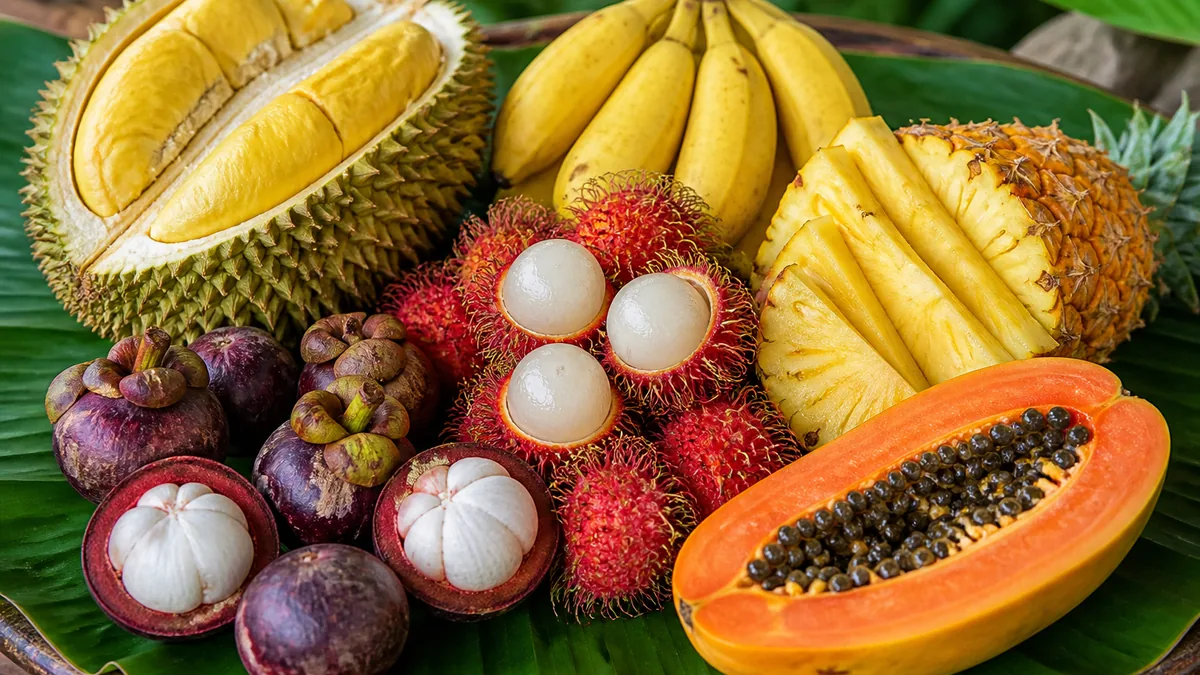
Malaysia’s equatorial climate delivers fruit diversity year-round — far beyond what most tourists encounter at hotel breakfast buffets. If you are visiting for a week, this guide prioritises what to eat, when it is in season, and where locals actually buy it.
Why Malaysian fruit is different
Three factors shape what you will taste: constant warmth (many trees fruit continuously), monsoon-driven flushes (mid-year peaks for durian, mangosteen, rambutan), and cultivar diversity (dozens of banana types alone). Supermarkets stock a safe subset; pasar pagi and highway stalls reveal the full range.
Asking “ni buah musim ke?” (“Is this in season?”) at any stall signals you care about quality — honest sellers will steer you toward peak fruit even if it means a different variety than you requested.
Everyday fruits (available year-round)
These appear daily and suit first-time tasters with mild flavours and easy eating:
- Papaya (betik) — sliced ripe with lime at breakfast; green shreds in kerabu and curries. See our papaya guide.
- Pineapple (nanas) — Johor MD2 is especially sweet; try grilled rings with chili dip. See pineapple guide.
- Banana (pisang) — dozens of cultivars; pisang berangan for eating, pisang abu for goreng pisang at night markets. See banana guide.
- Watermelon (tembikai) — Ramadan bazaar staple and beach cooler; seedless types dominate cities. See watermelon guide.
- Coconut (kelapa) — drinking nuts shaved roadside; santan in every curry. See coconut guide.
These five alone can fill a week of breakfasts and snacks without repeating preparation.
Seasonal specials (mid-year highlight)
If you visit June–September, prioritise the peninsula’s famous flush:
- Durian — June–August peak; start with D24 before Musang King if new to the flavour. Durian season guide.
- Mangosteen — pairs with durian; queen of fruits for a reason. Mangosteen article.
- Rambutan — hairy, juicy, sold by kilo on highways. Rambutan harvest guide.
- Longan & langsat — often sold alongside rambutan clusters at the same stalls.
Missing mid-year season? You still enjoy papaya, pineapple, banana, and dragon fruit — Malaysia never truly runs out of local fruit.
Agrotourism and farm experiences
Fruit tastes different when you see it on the tree:
- Dragon fruit — farm tours in Sepang; HL Dragon Fruit Eco Farm and our visitor guide.
- Pineapple — Johor belt roadside stalls and factory outlets. Johor Pineapple Belt.
- Strawberry — Cameron Highlands highland farms (cool climate, different season from lowland fruit).
Agrotourism suits families and photographers — plan half a day per farm including travel from Kuala Lumpur.
Where to shop as a visitor
| Venue | Best for | Tips |
|---|---|---|
| Pasar pagi | Freshness, price | Go before 9 am |
| Pasar malam | Variety, cooked + fresh | Evenings in residential areas |
| Highway stalls | Seasonal bulk, rambutan | Taste before buying kilos |
| Supermarket | Convenience, hygiene | Check stem freshness |
| Farm shop | Souvenirs, juice, story | Call ahead for hours |
Avoid buying durian in enclosed hotel lobbies — eat at designated stalls.
Practical tips for first-timers
- Buy from busy stalls — high turnover means fresher fruit.
- Start mild — papaya, banana, dragon fruit before durian.
- Carry wet wipes — sticky fruit happens.
- Ask before photographing farmers — usually welcomed at stalls, ask at private orchards.
- Check hotel rules — durian often banned; mangosteen and rambutan usually fine.
One-week sample tasting plan
| Day | Focus |
|---|---|
| 1 | Papaya breakfast, banana goreng at pasar malam |
| 2 | Pineapple juice, MD2 rings |
| 3 | Dragon fruit farm day trip to Sepang |
| 4 | Rambutan + mangosteen (if in season) |
| 5 | Coconut shake, ais kacang with seasonal topping |
| 6 | Durian tasting with local friend or guided stall |
| 7 | Mixed platter review — revisit favourites |
Adjust for season — swap durian week for watermelon-heavy weeks if visiting off-peak.
Browse all fruit guides for depth on each variety, and our blog for seasonal articles updated through the year.