Durian Prices in Malaysia 2026 — Why Musang King Got Cheaper and How to Buy Smart
Malaysia's 2026 durian glut explained — Musang King price drops, where to buy in KL and Raub, cultivar grades, and how to avoid overpaying during peak season.
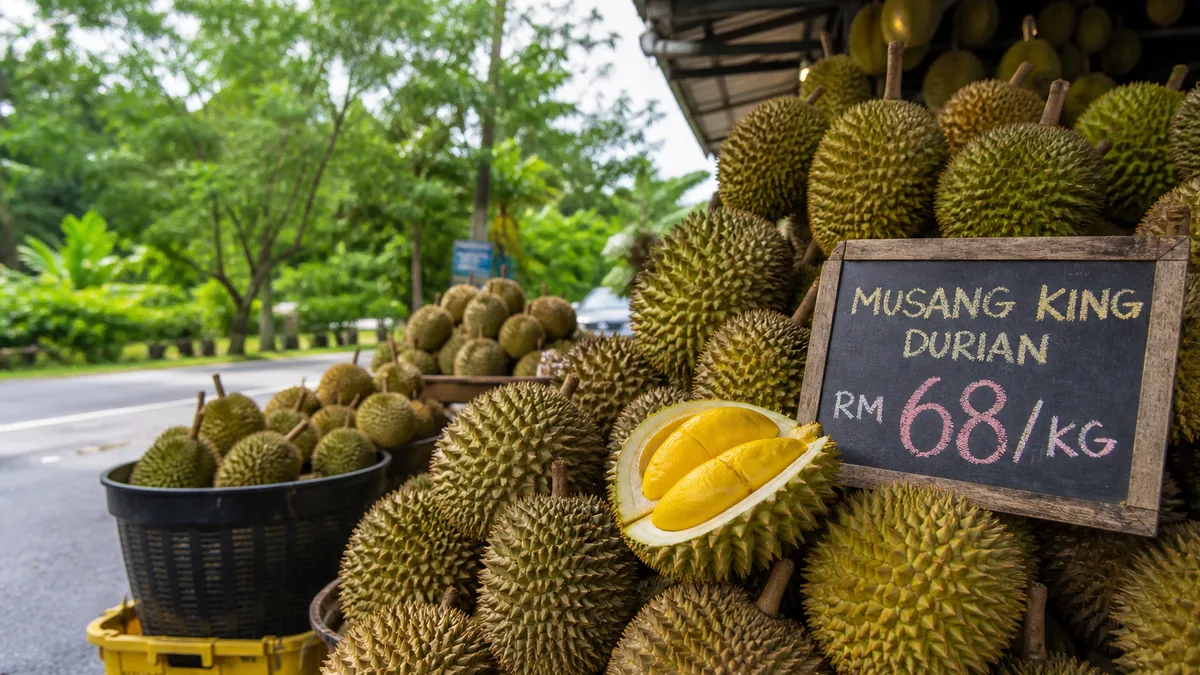
If you searched durian price Malaysia 2026 after seeing headlines about Musang King at unusually low rates, you are not alone. The June–August main season brought a bumper harvest across Perak, Penang, Johor, and Pahang — what farmers and media often call a durian tsunami — and stall prices in Kuala Lumpur, Melaka, and highway towns shifted faster than many buyers expected.
This guide explains why prices fell, what grades and cultivars actually cost in 2026, where Malaysians and visitors shop for value, and how to buy without the classic stall tricks. For season timing and etiquette, pair this with our durian season in Malaysia article and the full durian fruit guide.
What happened to durian prices in 2026?
Three forces collided during the 2026 main season:
- Maturing orchards. Many farmers converted land to durian between roughly 2015 and 2020 when export demand — especially for Musang King — looked strong. Trees that take five to ten years to reach full yield are now producing together.
- Synchronised harvest. Favourable weather compressed flowering across states. FAMA and industry groups noted overlapping harvest windows from June through August, flooding domestic markets with fruit that could not all clear export channels at once.
- Export grading pressure. Not every fruit meets China or premium export specifications. Fruit that fails size, blemish, or ripeness checks stays in Malaysia — often at steep discounts compared with export-grade lots.
National reporting in mid-2026 documented Musang King retail quotes from roughly RM9 to RM40 per kilogram depending on grade, location, and whether sellers priced by weight or by the bag. Premium export-quality fruit still traded higher — industry sources quoted RM30–RM40/kg for Grade A Musang King in some channels — while lower grades and smaller fruit saw the sharpest drops.
That spread matters: cheap headlines do not mean every durian on the table is premium Musang King. Buyers who understand cultivar names and grading avoid paying premium prices for kampung fruit mislabelled as D197.
Indicative 2026 price ranges (peninsula stalls)
Treat these as planning bands, not fixed quotes. Daily supply, rain, and weekend crowds move numbers by the hour.
| Cultivar / type | Flavour profile | Typical 2026 stall range (main season) | Buyer note |
|---|---|---|---|
| Musang King (D197) | Thick, bitter-sweet, custard | RM15 – RM45/kg (wide grade spread) | Ask for D197; verify flesh colour |
| Black Thorn (D200) | Intense, sticky, limited supply | RM25 – RM70/kg | Premium; confirm clone name |
| D24 (Sultan) | Balanced classic | RM12 – RM22/kg | Good entry cultivar |
| Red Prawn (Udang Merah) | Sweeter, orange flesh | RM15 – RM28/kg | Popular in Penang |
| Tekka / D160 | Bitter-forward | RM18 – RM30/kg | For experienced palates |
| Golden Phoenix | Milder, approachable | RM10 – RM18/kg | First-timer friendly |
| Kampung (seedling) | Variable | RM5 – RM15/kg | Bargain hunting; taste first |
During the 2026 glut, some roadside sellers promoted bag deals — fill a sack for a flat fee — which can be excellent value or a mix of grades. Always inspect what goes into the bag if the seller allows it.
Why Musang King headlines said “RM9 per kg”
Musang King (Durio zibethinus clone D197) became Malaysia’s most recognised premium cultivar during the export boom. When domestic supply surged, media focused on the lowest observed stall prices — sometimes tied to Grade C fruit, smaller sizes, or end-of-day clearance.
Export-grade Musang King did not uniformly collapse to single-digit ringgit rates. Orchard owners quoted in The Star noted that Grade A and AB fruit qualifying for export still sold in healthier bands, while smaller or blemished fruit absorbed most of the price shock.
For consumers, the 2026 season was a rare window to try premium cultivars without the RM60–RM80/kg peaks seen in tighter years — but only if you shop with eyes open.
Where Malaysians buy durian during peak season
Kuala Lumpur and Klang Valley
Urban buyers trade convenience for a small markup. Fruit trucks from Raub, Bentong, and Johor park near residential areas on weeknights; dedicated durian shops in Bukit Bintang, Cheras, and SS2-style neighbourhoods run late hours.
Tips for KL:
- Weekday late afternoon often beats Saturday night crowds.
- Compare price per kg before opening a second fruit.
- Pair your trip with morning produce shopping — see our KL morning markets guide.
- Hotels frequently ban durian indoors; eat at the stall or designated shops.
Raub and Bentong, Pahang
The highland corridor remains Musang King heartland. Friday-night drives from KL for Saturday breakfast durian are a peninsula tradition. Roadside arches advertise daily stock; orchard Facebook pages announce arrivals.
Combine a durian morning with highland greens or a later Genting agriculture day trip if you want contrast between lowland and cool-climate produce in one weekend.
Penang (Balik Pulau and island routes)
Penang skews toward Red Prawn, Black Thorn, and island orchard culture. Festival weekends during peak months draw queues — arrive early or visit mid-week.
Johor (Singapore-bound highways)
Johor blocks supply export-oriented mixes. Stalls cluster near major exits; quality is strong when harvest aligns with Singapore weekend demand.
Highway stalls (PLUS / East Coast routes)
Mid-year drives reward rambutan and mangosteen stops as well — read our rambutan harvest guide and mangosteen article. Durian piles appear beside these seasonal fruits from June through August.
Cultivars worth trying in a cheap season
A glut year is the best time to run a tasting flight instead of committing to one expensive whole fruit.
First-time visitors: Start with Golden Phoenix or D24, then sample Musang King if you enjoy bitter-sweet richness.
Experienced eaters: Compare Musang King (D197) against Black Thorn (D200) on the same day — texture and bitterness differ clearly.
Budget explorers: Kampung durian can surprise; ask sellers for lembut (mild) vs kuat (strong) if language allows.
Registered clone codes matter. Malaysia’s Department of Agriculture maintains cultivar registration; reputable sellers know D197, D200, and D24 codes even if marketing names blur in tourist areas. When in doubt, taste a wedge before buying kilos.
Botanical background on the species lives on Wikipedia’s Durio zibethinus page and general tropical fruit references such as Britannica’s durian overview.
Durian buffets, orchard tours, and agrotourism
Fixed-price durian buffets and orchard tours expanded during the 2020s as farms sought direct-to-consumer channels when export lots rejected fruit. In 2026, many operators used buffets and livestreams to move surplus — check social pages for same-day availability.
Agrotourism fits this site’s mission: seeing fruit on the tree explains why grade differences exist. An orchard walk clarifies why export rejects still taste good even if shells look imperfect.
We do not operate tours. Confirm hours, cultivar lists, and whether seating is outdoors before you drive. Tourism Malaysia lists broader highland and food-travel ideas; pair durian stops with non-farm attractions only after you have bought what you came for — heat and crowds shorten fruit quality fast.
How to buy smart and avoid overpaying
- Weigh before cutting. Agree cultivar, grade, and RM per kg on the whole fruit first.
- Watch the scale. Busy stalls are usually fair; still glance at the display.
- Sample one fruit. Reputable sellers open a wedge to show colour and texture.
- Do not confuse names. “Musang King” on a chalkboard is not proof — ask if it is D197.
- Eat same day. Room-temperature durian declines within hours; refrigerate only overnight if needed.
- Bring mangosteen. Locals pair durian with mangosteen to refresh the palate — both peak mid-year.
- Respect rules. Many hotels, trains, and malls restrict durian — eat at designated areas.
Pairing durian with other mid-year fruit
June–August is not only durian season. The same wet markets and highway stalls stock:
- Rambutan — juicy, mild; buy clusters with plump spines.
- Mangosteen — purple rind, snowy segments; classic durian companion.
- Langsat and longan — often sold on shared tables.
Building a mixed fruit evening costs less in 2026 than in tight-supply years — useful for families who want variety without a single RM200 Musang King.
For visitors new to the full tropical lineup, start with our Malaysian tropical fruits for tourists overview.
What happens after August?
Main peninsula flush typically eases by late August, though tail-end fruit and regional variation continue into September in some districts. Prices usually firm as supply thins.
A secondary window often appears around December–January in many states — smaller volume, sometimes higher per-kg prices, still excellent for travellers who miss mid-year.
Lowland tropical fruit remains available year-round: papaya, banana, dragon fruit, and pineapple. Off-season durian hunters can plan a Sepang dragon fruit farm day instead — different crop, same agrotourism logic.
Is cheap durian “bad” durian?
Not necessarily. Glut pricing reflects volume and grading, not automatic poor flavour. Many rejected export fruits taste excellent fresh — they may simply be smaller or marked.
Conversely, the lowest bag deals sometimes mix cultivars or overripe pulp. Smell, colour, and a sample wedge remain the best tools. If aroma is alcoholic or fermented, skip it.
Planning a 2026 durian weekend from KL
| Day | Morning | Afternoon / evening |
|---|---|---|
| Saturday | Drive to Raub/Bentong before traffic peaks | Orchard stall tasting; buy one cultivar to eat on-site |
| Sunday | Pasar pagi for mangosteen and rambutan | Rest — durian richness adds up |
| Budget | Strategy |
|---|---|
| Under RM50 | Kampung durian + mangosteen sharing plate |
| RM50–120 | One mid-tier cultivar (D24 or Red Prawn) for 2–3 people |
| RM120+ | Musang King or Black Thorn tasting with seller-guided selection |
Related reading
- Durian season in Malaysia — regions & etiquette
- Durian fruit guide
- Mangosteen — queen of fruits
- Rambutan harvest guide
- KL morning markets for tropical fruit
- Malaysian tropical fruits for tourists
- All fruit guides
- Blog index
The 2026 durian season will be remembered as the year premium fruit returned to ordinary tables — if you know which cultivar you are buying, when to visit, and how to eat it before the aroma follows you home.
Frequently asked questions (2026)
Is durian still in season in late August?
In most peninsula states, late August is the tail of the main flush. Stalls may still carry fruit, but cultivar choice narrows and prices can rise week by week as supply thins. Follow orchard social pages for daily stock rather than assuming peak glut pricing continues.
Why is durian banned in hotels and trains?
Durian’s sulfur-rich aroma penetrates fabrics and ventilation. Many hotels, MRT/LRT operators, and taxis restrict the fruit in enclosed spaces — not as a quality judgment, but to protect other passengers and guests. Eat at open-air stalls or dedicated durian shops.
Can I freeze durian pulp?
Yes, for cooking (pengat, pastries, smoothies). Texture changes after freezing — it is not a substitute for same-day fresh eating. Vacuum-sealed export packs use industrial freezing; home freezers work for leftovers you plan to cook within weeks.
Is Musang King the same as Mao Shan Wang?
Mao Shan Wang is the common Chinese market name for Musang King (clone D197). Same cultivar family; verify flesh colour and seller reputation rather than relying on romanised spelling alone.
Should tourists try durian on their first day in Malaysia?
Only if you enjoy strong aromas and rich food. Many visitors prefer day two or three after adjusting to humidity and spice — and after buying milder fruit like papaya or dragon fruit. Start with one seed, not a whole fruit.
Where does Malaysia export durian?
China has been the largest premium export market in recent years, with Thailand and Vietnam also competing in the broader Southeast Asian durian trade. Domestic gluts often trace to fruit that misses export specifications — which can benefit local eaters without hurting export-grade pricing as severely.
What should I drink after durian?
Water is fine. Locals often follow durian with mangosteen or plain tea. Myths about durian + alcohol vary by source; if unsure, keep combinations moderate.
Late-season checklist (August–September)
| Check | Action |
|---|---|
| Cultivar still listed? | Ask if stock is main-season tail or mixed grades |
| Price posted? | Tail season sometimes reverses the glut — confirm per kg |
| Pairing fruit | Buy mangosteen while both still appear together |
| Transport | Plan open-air eating; avoid carrying husks into ride-hail cars |
| Next trip | Bookmark durian season guide for Dec–Jan secondary window |