Starfruit in Malaysia — Belimbing, Carambola, and the Names That Confuse Shoppers
Why Malaysians call starfruit belimbing, how belimbing manis differs from belimbing buluh, and how to buy the right fruit at pasar pagi.
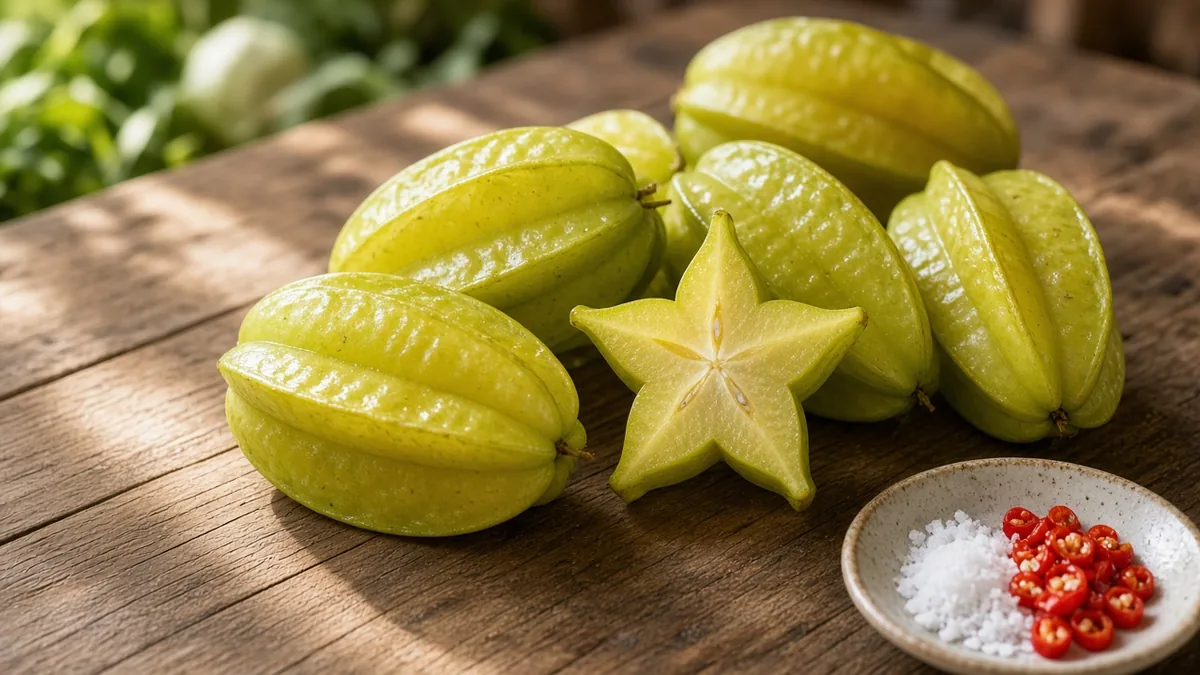
Ask for starfruit at a Kuala Lumpur pasar pagi and the seller may pause. Ask for belimbing and the pile of ridged yellow fruit appears immediately. The English name describes the slice. The Malay name is what the market actually uses. Between those two words sit several more — belimbing manis, belimbing besi, belimbing buluh, carambola, and the Chinese-market name yang tao — and they do not all mean the same fruit.
This guide sorts the names, explains which ones are sweet eating fruit and which are sour cooking fruit, and shows how to buy the right one. For a short profile of the star-shaped fruit itself, see the starfruit guide. For how morning markets are laid out, use the KL morning markets guide.
Why the slice has a star
The fruit most tourists mean is Averrhoa carambola, a small tree in the wood-sorrel family. When you cut it across the middle, five (sometimes four or six) longitudinal ridges become the points of a star. That shape is why English settled on starfruit and star apple in some older travel writing, and why hotels garnish fruit platters with a single slice.
The botanical name carambola travelled into English from Portuguese, which took it from a South Asian word for the fruit. Reference summaries such as the carambola page on Wikipedia and the species entry in botanical references trace the plant to tropical Asia, with Malaysia, Indonesia, and southern China among the places where it became an everyday garden tree rather than an imported luxury.
In Malaysia the everyday word is belimbing. You will see it on handwritten stall cards, in recipe blogs, and in the names of pickles. If a label only says “starfruit” in a supermarket, it is usually the same sweet or mildly tart carambola sold loose as belimbing at the wet market — often at a higher price for the plastic tray.
A short map of the names
| Name you hear | What it usually means | Eat it how |
|---|---|---|
| Belimbing | Starfruit in general (Averrhoa carambola) | Ask sweet or sour before you buy a kilo |
| Belimbing manis | Sweet eating type, yellow when ripe | Fresh, juice, fruit platters |
| Belimbing besi | Firmer, sharper fruit; name varies by stall | Cooking, asam, chili dip |
| Belimbing buluh | A different species (Averrhoa bilimbi) | Sambal, pickles, souring curries — not a star slice |
| Carambola / starfruit | English and export names for A. carambola | Same fruit as belimbing |
| Yang tao (杨桃) | Common Chinese-market name in Malaysia | Same fruit; often sold by the piece |
| Five fingers / star apple | Older English descriptions | Same fruit; rare on modern stall cards |
The row that causes the most wasted money is belimbing buluh. It looks related. It is related. It is not the star you slice for a photo.
Belimbing manis and belimbing besi
Malaysian home gardens and small orchards grow more than one style of carambola. Sellers sort them by taste more than by a formal clone code.
Belimbing manis (“sweet belimbing”) is the one most visitors want. Ripe fruit turns yellow, sometimes with light brown along the ribs. The flesh is crisp, juicy, and mildly sweet, with a clean sour edge rather than the punch of lime. It is the fruit for eating out of hand, for juice stalls, and for the star on a hotel breakfast plate. Thin skin bruises if you stack it under pineapples in a market bag — buy it last, the same way you would buy ripe papaya.
Belimbing besi (“iron belimbing”) is the name many stalls use for firmer, sharper fruit. The skin stays greener longer. The bite is sour enough that people salt it, dip it in chili, or cook it. Exact usage of besi versus masam (“sour”) shifts by state and even by stall. What matters at the counter is the question: manis atau masam? — sweet or sour?
Commercial trees in Johor, Selangor, Perak, and parts of Sabah supply both city markets and juice factories. Home trees in kampung gardens often fruit lightly through the year, with heavier flushes after flowering. That is why you can find belimbing in morning markets outside the famous mid-year durian window. It is an everyday fruit, not a festival fruit.
Belimbing buluh is not starfruit
Belimbing buluh — also called belimbing asam in some kitchens, and bilimbi or cucumber tree in English — is Averrhoa bilimbi. The fruit is smaller, clustered along the trunk and older branches, and shaped more like a gherkin than a star. Cut it and you do not get a clean five-point slice. The taste is intensely sour.
Cooks use it the way other cuisines use tamarind or green mango: to sour sambal belacan, fish curries, and pickles. Nyonya and Malay pantries keep belimbing buluh jars beside pineapple and dried chili. A vendor who hears “belimbing” and hands you a bag of small green cylinders is not cheating you. They heard the sour fruit their regular customers cook with.
If you wanted stars, say belimbing manis or point at the ridged yellow fruit. If you wanted the souring agent for a curry, say belimbing buluh.
Botanical lists treat the two as sister species in the same genus. A clear public summary of the star-shaped species is the Encyclopaedia Britannica carambola entry. Kitchen practice in Malaysia is the faster test: one slices into stars and can be sweet; the other never does and is almost always cooked or pickled.
Other languages you will meet in the same market
Greater KL markets are multilingual. The same crate may be labelled three ways.
- Malay: belimbing, belimbing manis, belimbing besi, belimbing buluh.
- English on export stickers: carambola, starfruit. Supermarkets sometimes print both.
- Chinese (especially Cantonese and Mandarin stalls): yang tao. In some households the sour bilimbi has its own name and is not sold as yang tao.
- Tamil-speaking stalls: you may simply hear “star fruit” or a borrowed “belimbing,” because the wet-market Malay name travels across languages.
- Indonesian visitors: belimbing is already the word they use at home, so the fruit feels familiar even when the chili dip beside it does not.
Export cartons headed for Singapore or further afield usually print carambola because that is the name on phytosanitary paperwork. The Department of Agriculture Malaysia publishes crop and good-practice material for growers; consumers rarely need the paperwork, but the English name on a box is a clue that the fruit was packed for trade rather than for a neighbourhood stall.
How Malaysians actually eat it
Starfruit shows up in ordinary meals more often than in “exotic fruit” lists written for tourists.
Fresh and salted. Green or firm fruit, cut into wedges, with salt, asam boi (preserved plum), or chili. This is the school-gate and night-market habit. Sweet yellow fruit needs less salt.
Rojak. Slices go into fruit rojak and sometimes rojak pasembor, where the sour ribs cut through peanut sauce and shrimp paste. A mixed plate may also include pineapple, mango if in season, and cucumber. Our Malaysian tropical fruits for tourists article places belimbing among the fruits visitors walk past because the English name is missing from the sign.
Juice. Stall blenders combine belimbing with sour plum, honey, or calamansi. On its own the juice is pale and sharp. It is a hot-afternoon drink, not a dessert smoothie.
Pickles and sambal. Belimbing buluh is the classic souring fruit here. True starfruit is sometimes pickled too, especially firmer fruit, but if a jar says jeruk belimbing buluh you are buying the cucumber-shaped cousin.
Garnish. Hotels and cafes like the star because it holds its shape on a plate. That use made the English name famous even while Malaysians kept saying belimbing.
Pair a market morning with other everyday fruit — banana, papaya, coconut — and belimbing stops looking like a novelty. It is one item in a crate, next to things people buy every week.
How to buy belimbing manis
Use this at the stall. The starfruit guide has the short version; this is the shopping version.
- Name the sweetness. Say belimbing manis if you want fruit to eat raw. Say belimbing buluh only if you are cooking.
- Colour. Yellow with a little brown on the rib edges is ripe and sweeter. Solid green is sharper and better for cooking or chili dips.
- Feel. Ripe fruit is firm-crisp, not rock hard and not wrinkled. Dull, soft shoulders mean it sat too long.
- Smell. A light fruity smell is fine. Fermented or alcoholic smell means skip the pile.
- Ribs. Clean ridges slice into better stars. Deep cracks or black soft spots spoil the look and the taste.
- Price by weight. Compare two stalls before you commit. Belimbing is rarely a bargaining drama; turnover matters more than a one-ringgit discount.
- Bag it last. The skin is thin. Put it above watermelon and whole pineapple, not underneath.
Weekday mornings before nine are calmer than Sunday. The same timing advice in the KL morning markets guide applies here: walk the fruit row once, then buy.
Season and where it grows
Carambola is a lowland tropical tree. It does not need Genting’s cool nights the way strawberries do. Mature trees in Johor, Selangor, Perak, and Sabah often carry fruit more than once a year, and backyard trees can show a few fruits in almost any month.
That pattern is different from rambutan, mangosteen, and durian, which crowd the markets in a mid-year flush. If you miss durian season, belimbing is still a reason to stop at a stall. Read the rambutan harvest guide and the durian season guide when you want those fruits; use this page when the sign says belimbing.
Highland day trips are a separate craving. Strawberries and greens near Genting are covered in the Genting highland agriculture guide. Do not expect starfruit tunnels on that ridge. Buy belimbing in the Klang Valley or in lowland towns on the way home.
In the kitchen
Five-minute snack. Wash, slice across the ridges, sprinkle salt or a squeeze of lime. Eat with a toothpick if you are standing at a stall.
Juice for four. Blend ripe yellow fruit with cold water, a spoon of honey, and a few calamansi. Strain if you dislike the fibre. Serve over ice.
Rojak-style plate. Toss slices with pineapple, cucumber, and a spoon of peanut sauce. Add green mango if the stall has it. This is closer to fruit rojak than to a Western fruit salad.
With chili. Firm green fruit, cut into sticks, with sambal or a mix of chili, salt, and a drop of lime. This is the belimbing besi habit.
Do not force belimbing buluh into a star garnish. It will taste like neat lime juice and look like a pickle. Use it in a fish sambal instead, the way the aunties who labelled the bag intended.
Oxidation browns the cut surface after a while. A little lime juice on a platter slows that. Refrigerate cut fruit and eat it the same day. Whole ripe fruit keeps several days in the fridge; leave very green fruit on the counter if you want it to yellow.
A health note worth reading once
Starfruit is a normal food for most healthy adults in the amounts people eat at a stall. It is also high in oxalate, and medical reports link large amounts — especially juice — to serious problems in people with kidney disease. Public explanations of that risk appear in patient-facing material from the National Kidney Foundation.
This site is a fruit guide, not a clinic. If you have kidney disease, are on dialysis, or have been told to limit oxalate, skip starfruit and starfruit juice unless your doctor has said otherwise. Everyone else can treat a few slices as an ordinary snack.
Vitamin C and a high water content are the modest nutrition points sellers mention. They are real. They are not a reason to drink a litre of juice.
What to tell a visitor in one minute
If you are walking a guest through a market, use this script:
- Point at the ridged yellow fruit and say belimbing, then “starfruit” so the English name sticks.
- Slice one piece so they see the star. That single cut explains the English word better than a paragraph.
- Offer salt on a green piece and a plain bite of a yellow piece so they taste masam versus manis.
- If a bag of small green cylinders appears, say that is belimbing buluh — sour, for cooking, different fruit.
- Mention the kidney-disease warning once, calmly, then move on to coconut or papaya if they want something milder.
Tourism Malaysia introduces food and market visits in general terms. The names on the chalkboard are local knowledge those pages do not spell out. That is the gap this article is for.
Common mix-ups
“The starfruit was too sour.” You likely bought belimbing besi or under-ripe fruit, or you were given belimbing buluh. Next time ask for belimbing manis and choose yellow ribs.
“The supermarket starfruit and the market belimbing taste different.” They can. Supermarkets often stock a milder export type. Markets stock whatever the morning truck brought, including sharper garden fruit. Both can be Averrhoa carambola.
“I pickled starfruit and the recipe wanted belimbing buluh.” Swap in the small sour fruit, or use less starfruit plus a squeeze of lime. The recipe was written for the sour species.
“Is it related to blimbing in Filipino cooking?” Yes. Balimbing in the Philippines is the same carambola. Regional languages kept their own words long before English menus printed “starfruit.”
Related reading
- Starfruit guide — season, serving ideas, and a short buying note
- KL morning markets for tropical fruit — where belimbing sits among the other crates
- Malaysian tropical fruits for tourists — a first-week tasting list
- Rambutan harvest guide and mangosteen — mid-year fruits that share the same stalls
- All fruit guides
Belimbing is one of the few Malaysian fruits whose English name describes a cut surface and whose Malay name describes the fruit on the tree. Learn both, and learn that buluh is the sour cousin. After that, the stall is simple: yellow for eating, green for chili, and the little cylinders for the curry pot.