Langsat and Duku Season on Malaysia's East Coast — When to Buy and How to Tell Them Apart
A practical guide to langsat, duku, and dokong on the East Coast — harvest months, how to peel them, and how to avoid mixing them up with longan.
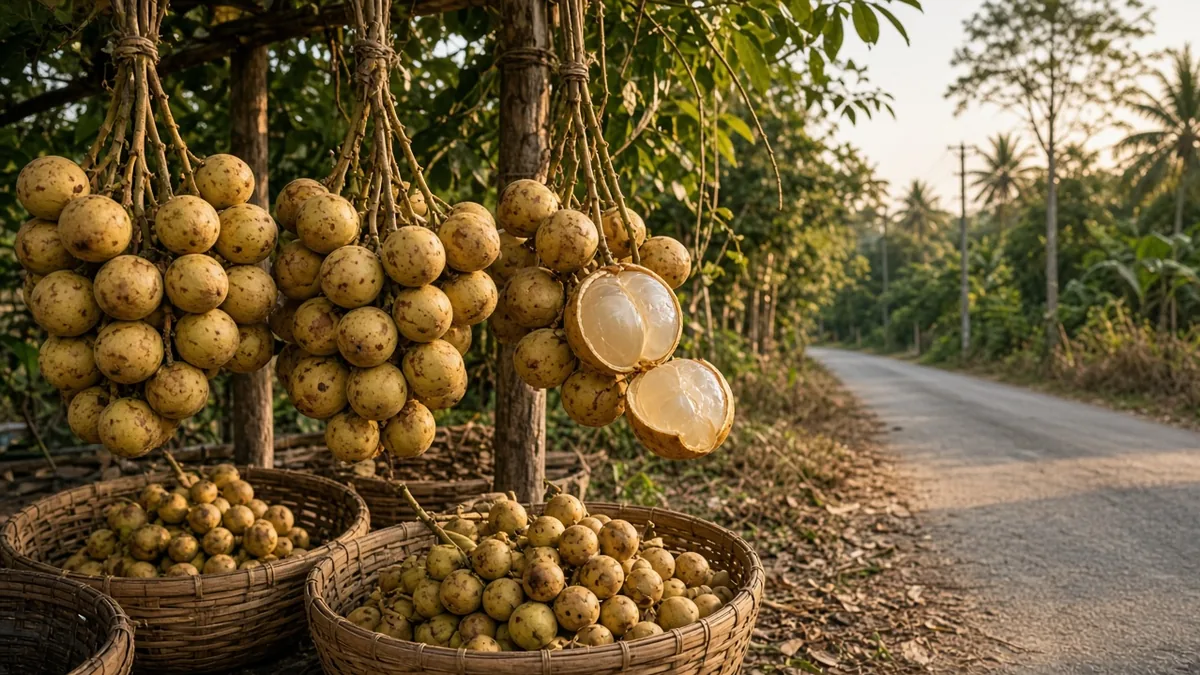
By early September the East Coast roads between Kuantan, Kemaman, and Kuala Terengganu start to look like a fruit corridor. Stalls appear under zinc roofs and roadside trees, and the fruit in the baskets is not durian and not rambutan. It is small, round, dull yellow to pale brown, and sold in clusters. Malaysians call it langsat, duku, or dokong, depending on the skin, the latex, and which town you stopped in.
This guide is for that season: when the harvest usually runs, how the three names differ, where East Coast travellers actually find the fruit, and how to buy a bunch that is sweet instead of sour or mouldy. The short profile lives on the langsat and duku guide. If you are shopping in Kuala Lumpur rather than driving the coast, use the morning markets guide and treat this page as the field note for the fruit itself.
What you are actually buying
Langsat, duku, and dokong are forms of the same tropical tree, Lansium domesticum (also filed in some texts as Lansium parasiticum). The Wikipedia entry for Lansium parasiticum groups them as one species with several cultivated types. They are not a kind of longan, even though both have translucent flesh and a thin brown skin. Longan (mata kucing) is a different plant, Dimocarpus longan, with a smoother shell and a single black seed that looks like an eye. If a stall mixes the names, taste and skin will sort them out faster than the sign.
A ripe cluster looks like a bunch of large grapes that never turned purple. Each fruit is a tight ball. Pinch the skin and it splits; inside are a few glossy, glassy segments. Some segments hide a bitter green seed. The flavour, at its best, is a clean sweet-tart juice with almost no perfume — the opposite of cempedak or durian, which announce themselves across a car park.
Trees are tall and suited to humid lowlands at the edge of old forest and village orchards. They are not a highland crop. You will not find them in strawberry tunnels near Genting. The Genting highland agriculture guide is for cool-climate produce. Langsat belongs to the hot, wet belt: Pahang, Terengganu, Kelantan, Johor, and parts of Perak.
Langsat, duku, and dokong
Sellers use the three names as if they were different fruits. Botanically they are close. In the mouth they are not interchangeable, and the price usually follows the difference.
| Type | Skin and size | Latex | Taste | Typical use |
|---|---|---|---|---|
| Langsat | Smaller, thinner skin, dull yellow-brown | More sap when peeled | Tart-sweet, brighter | Snacking, cheaper bunches |
| Duku | Larger, thicker skin, paler | Less sap | Milder, softer sweet | Gifts, people who dislike sharp fruit |
| Dokong (duku langsat) | Medium-large, thicker skin, fewer seeds | Little sap | Sweet, less acid | East Coast favourite, especially Kelantan and Terengganu |
Langsat is the everyday bunch. The skin is thin enough to tear with a thumbnail. Sap can stick to your fingers and stain a steering wheel, so people peel over a bag. The taste leans tart when the fruit is early or when rain diluted the sugars. A good one is juicy and only gently sour.
Duku is the milder cousin. The skin is thicker and often comes off in larger pieces. There is less latex, so it is the one you hand to someone who has never tried the fruit. It costs more when both are on the table, because eaters will pay to avoid the sour edge and the sticky fingers.
Dokong — also written dukong, and related to the Thai longkong — is the type many East Coast people mean when they say the season has started. It was selected for thicker skin, lower latex, and a sweeter, less acidic flesh. Kelantan and Terengganu treat dokong as a local point of pride the way Raub treats Musang King. A stall that says only “langsat” may still be selling dokong; ask ini dokong ke langsat? before you buy a few kilograms for the drive home.
Hybrids and seedling trees blur the lines. Two bunches from neighbouring villages can both be honest and still taste different. The question to ask is not the Latin name. It is: manis atau masam? — sweet or sour? — and whether the seller will let you taste one fruit from the bunch you are about to pay for.
When the East Coast season actually runs
Flowering follows the rains. A dry spell, then a soak, then months of waiting. On the peninsula the main harvest for langsat, duku, and dokong commonly sits between July and October, with the East Coast often busiest from August into September. That is why a 2 September drive up the coast is well timed: early fruit has already proved the season is real, and many orchards have not yet finished.
Treat the window as a band, not a promise. A late monsoon can push Kelantan two weeks behind Pahang. A heavy storm can split skins and send sour fruit to market early. Orchard WhatsApp groups and the hand-painted signs on the trunk road are more current than any national calendar.
A typical season has three beats:
- Early (often late July to early August). Supply is thin. Fruit can be sharp. Prices sit higher because weekend drivers from Kuantan and Kuala Terengganu want the first sweet bunch. Buy a small cluster and taste it. Do not fill the boot.
- Middle (August to mid-September). This is the week to travel if you can choose. More villages are picking at once, so you can compare dokong and langsat at neighbouring stalls. Sweet fruit is easier to find, and bunches are heavier.
- Late (late September into October). Volume is still there, then it thins. Skins dull, and a sour or fermented smell shows up in fruit that sat in plastic. Buy from piles that are being restocked, not from the bunch that has been in the sun since morning.
West-coast cities get the same fruit a day or two later, trucked from Pahang, Johor, and the East Coast. Kuala Lumpur pasar pagi in September often has langsat beside longan and the last mangosteen. The fruit is fine. It is not the same as buying it where it was picked that morning. If the trip is the point, drive the coast. If Tuesday night in Cheras is the point, the wet market is enough.
The Department of Agriculture Malaysia publishes grower guidance and, in some years, notes on fruit supply. Consumers do not need those circulars to shop, but they explain why a “season” moves: the crop is rain-fed and village-scale, not a factory line.
Where to stop on an East Coast drive
There is no single langsat park with a ticket booth. The season is a string of small stalls and front-yard tables. Plan the drive, then buy where the fruit looks alive.
Pahang coast (Kuantan, Pekan, Gambang approaches). Fruit from inland Pahang and local gardens meets weekend traffic from the east. Stalls sit near junctions rather than in the city centre. Pair a stop with beaches or a night in Kuantan, not with a highland loop on the same afternoon.
Terengganu (Kemaman, Dungun, Marang, and roads toward Kuala Terengganu). This is dokong country for many families. Look for tied bunches hanging from a beam, not only fruit loose in a basin. Hanging fruit stays drier. Basins that have sat in the rain collect sour juice at the bottom.
Kelantan. Dokong here is a point of local identity, sold toward Kota Bharu and along roads that feed the city from orchard districts. If you are already in the state for food, the fruit is a better souvenir than another box of crackers: it must be eaten within a few days, which forces you to share it.
Johor and Perak as comparison. Johor orchards supply southern markets and some Singapore-bound wholesale. Perak fruit reaches Ipoh and the north. They are part of the same season, but they are not the East Coast drive this article is built around. Use them when you are already on that highway.
Tourism Malaysia lists East Coast destinations for beaches, islands, and food towns. It will not tell you which stall had sweet dokong this morning. Use it for the route and the weather, then use your eyes at the fruit table.
A sensible one-day pattern from Kuantan:
| Time | Plan |
|---|---|
| Morning | Leave before the road heats up; first stall after you are clear of town |
| Late morning | Taste one langsat and one dokong at two different tables |
| Midday | Buy only the bunch you liked; eat it in the shade, not in a closed car |
| Afternoon | Continue toward the next town or turn back before evening rain |
Do not add a durian buffet, a beach, and a night market to the same morning. Langsat is thirsty work in a small way — you will want water and wet wipes — and the fruit spoils if it rides for hours in a hot boot.
How to choose a sweet bunch
Stand at the stall and do this in order.
- Ask the type. Langsat, duku, atau dokong? If you want mild and low-latex, ask for dokong or duku. If you like a sharper juice, langsat is the one.
- Look at the skin. Even pale yellow to light brown, no grey mould, no wet collapsed fruits in the middle of the bunch. Green fruit is not “extra fresh.” It is under-ripe and sour.
- Check the stem. A bunch that still holds together, with fruit that comes off when you twist rather than falls off at a glance, is in better shape than loose fruit rolling in a sticky tray.
- Smell the bottom of the pile. Fermented, winey, or musty means the bunch was bagged wet. Walk on.
- Taste one. A good seller expects this in season. Peel it yourself so you learn the latex. Sweet juice and a seed you can spit out is a yes. Sharp, dry, or bitter flesh is a no, even if the price is lower.
- Buy less than you think. A kilogram disappears once people start peeling. Two kilograms in a hot car becomes a problem by the next town.
- Skip sealed plastic. The fruit sweats. Open baskets and hanging bunches stay cleaner.
The same habits apply at a Kuala Lumpur market in September. The KL morning markets guide covers arrival time and how to walk a row before you commit. Langsat is one crate in that row, next to rambutan earlier in the season and longan when both overlap.
How to peel it without wearing the sap
Langsat latex is the detail visitors remember after the taste. It is sticky, slightly bitter if it touches the flesh, and it marks car seats.
- Pinch the skin at the tip or the shoulder until it splits.
- Pull the skin downward in strips, holding the fruit over a bag or a sheet of newspaper.
- If sap strings onto the flesh, wipe the segment, do not lick your fingers and then touch the next fruit.
- Duku and dokong usually release less sap. Start a nervous eater on those.
- Seeds are bitter. Spit them. Do not bite through a segment “to see.”
Children manage this fine once they see it once. Hand them duku, a napkin, and a place to put skins. Do not hand them a langsat bunch in the back seat of a Grab.
Eating, keeping, and cooking
Langsat is a raw fruit. Malaysians rarely cook it. The point is the juice.
On the spot. Peel and eat while the fruit is still cool from the morning. This is the best it will taste.
At home. Spread the bunch in a shallow tray, not in a tied plastic bag. Eat within two to four days. The flavour dulls in the fridge and the skin darkens, but a short chill is better than a warm kitchen if the weather is heavy. Bring it back to room temperature before you peel a bowl for guests.
As a gift. East Coast families carry dokong balik kampung the way other states carry durian or pineapple. Tell the recipient to eat it this week. A box that travels to Singapore or a Klang Valley office on Friday should be opened on Friday.
What not to do. Do not blend a sour bunch into a jug of juice to “save” it. You will amplify the acid. Do not store it beside cut starfruit or other soft fruit in one sweating bag. And do not assume a recipe that says langsat means longan. Thai and Malaysian desserts sometimes use longan; the names get translated loosely on English menus.
A mixed September plate at home can be langsat, the last mangosteen, and a mild papaya. That is a better introduction for guests than a single sour bunch on its own. The tourist fruit list puts langsat in the mid-year group for that reason: it rewards people who already like rambutan and want something quieter.
Price, without pretending there is one national rate
There is no official langsat price that holds from Pekan to Kota Bharu. Early bunches cost more. Dokong often costs more than thin-skinned langsat at the same table. Weekend stalls on the main road cost more than a village table one junction inland. Rainy weeks cost more because less fruit is picked dry.
Use three checks instead of a number you found online:
- Compare two stalls within ten minutes of each other.
- Pay more only if you have tasted the sweeter type.
- Walk away from a “special price” tub of loose, wet fruit. The discount is the damaged bunch.
If you are buying for a family of four for the drive, one good bunch is plenty. If you are buying for a house of relatives, ask the seller which bunch was picked today and take that one, not the display bunch at the front that everyone has handled.
A September weekend from the Klang Valley
You can eat East Coast langsat without sleeping in Kuantan, but you should not pretend it is a two-hour outing.
Option A — market only. Saturday pasar pagi in Kuala Lumpur or Petaling Jaya. Look for langsat or dokong next to longan. Taste before you buy a kilogram. This takes an hour and teaches the flavour. It does not teach the coast.
Option B — overnight on the coast. Drive to Kuantan or toward Kemaman on Friday evening or early Saturday. Spend Saturday morning on the stall road, eat the fruit the same day, and use the afternoon for the beach or the town. Sunday return. This is the version that matches the season.
Option C — combine with other seasonal fruit, not with the highlands. September is late for the main durian glut and still fair for mangosteen in some districts. Build one fruit day, not three. Highlands strawberries are a different climate and a different road. Save Genting for another week.
Whichever option you pick, carry tissue, a small bag for skins and seeds, and water. The fruit is juicy. The sap is not.
Mistakes that waste the season
Buying green because it looks firmer. Firm and green is sour. Pale yellow and slightly yielding at the stem end is what you want.
Calling everything langsat. You may be holding dokong and paying langsat prices, or the reverse. Ask.
Confusing it with longan. Longan skin is browner and smoother, the flesh clings to one dark seed, and the season overlaps. Peel one of each once and you will not mix them up again. Both can be good. They are not substitutes in a recipe that cares about juice and acid.
Leaving the bunch in the car while you swim. An hour in a closed car on the East Coast is enough to sour the flavour and bake the sap onto the upholstery. Eat first or take the fruit into the shade.
Waiting for October “when it will be cheaper.” Some years the cheap week is already over by the time you clear your calendar. If you pass a stall in early September and the taste is sweet, buy it. The next town may be selling last week’s fruit.
Names you may see on a sign
| Sign | Read it as |
|---|---|
| Langsat | Thinner skin, more sap, tart-sweet |
| Duku | Thicker skin, milder |
| Dokong / dukong | East Coast sweet type, less sap |
| Longkong | Often the same family as dokong, a name more common in Thai trade |
| Lanzones | The Philippine name for this fruit family, useful if you are reading an English export note |
| Mata kucing | Longan, not langsat — keep walking or buy it as a different fruit |
Export notes and botanical lists use Lansium because the trade name has to survive translation. The species overview on Wikipedia is enough background if you want the plant, not the recipe. The stall still wants the local word.
What to tell a first-timer
- This is langsat season, roughly July to October, and the East Coast is in it now if the stalls are up.
- The sweet, less sticky one is usually dokong or duku.
- Peel it yourself, spit the seed, and do not bite the skin.
- Eat it today or tomorrow.
- It will not smell like durian, and hotels rarely ban it. The mess is sap and skins, not aroma.
Then stop explaining and hand them a segment. The fruit is mild. A long speech makes it sound rarer than it is. For a few weeks a year it is one of the ordinary pleasures of the coast, sold by people who will let you taste it if you ask.
Related reading
- Langsat and duku fruit guide
- Longan guide — the other translucent fruit in the same season
- KL morning markets
- Rambutan harvest and mangosteen
- Starfruit names — another fruit that is easy to mis-order
- All fruit guides
September on the East Coast is a narrow, generous month. The beaches are the famous reason to go. The baskets of langsat, duku, and dokong are the reason to leave the main road for ten minutes, taste one fruit, and buy only the bunch that was sweet.